Distributed Warehousing & Inventory Management
Strategic inventory positioning made simple with WSI’s connected network.
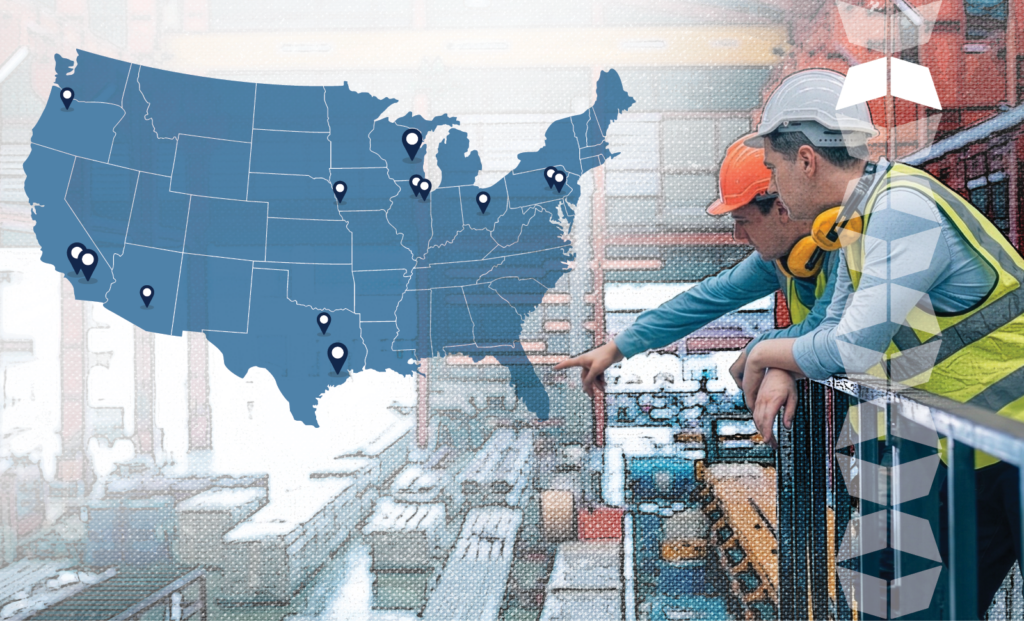
A single warehouse can simplify inventory control, but it does not always put products where they need to be. Distributed warehousing places inventory across multiple strategically selected facilities instead of relying on one central warehouse. The goal is to build a distribution network that positions the right inventory in the right places.
Specialized storage & handling capabilities
Hazardous materials, food-grade inventory, and climate-sensitive products require permitted, specialized facilities. WSI operates facilities built for the products that go in them.

Optimized inventory positioning
Work-in-progress inventory belongs near production to keep lines running. Finished goods belong near customers to reduce transit time. WSI’s reach gives shippers more options and flexibility.

Timely inventory and shipment visibility
Distributed inventory adds complexity only if the systems and processes aren’t there to manage it. WSI’s warehouse tech stack and customer portal provide timely visibility and inventory insights.
The right warehouse for every type of inventory
The best location for standard finished goods may not be the best location for hazardous materials, rail-served freight, oversized products, or inventory tied closely to production. Distributed warehousing allows facility selection to reflect the needs of the product rather than forcing every SKU into the same operating model.


Multiple warehouse locations, one coordinated network
Managing inventory across multiple warehouse locations introduces complexity only if those locations aren’t connected. WSI operates multi-site operations under a coordinated system. Leverage shared inventory visibility, consistent processes, and reporting that spans multiple locations so nothing gets lost between sites.
Regional Distribution Centers
Position finished goods closer to major customers, distribution points, or population centers to reduce unnecessary transportation distance and support more consistent service.
Manufacturing Adjacent Storage
Locate raw materials, manufacturing components, or finished goods near production facilities to support replenishment schedules and reduce the distance between manufacturing and storage.
Distributed Fulfillment Operations
Support faster order fulfillment and wholesale inventory replenishment across multi-warehouse operations, with the inventory visibility that keeps the broader network connected.

Centralized visibility across a distributed network
Adding warehouse locations creates a visibility problem only if the systems managing them aren’t connected. WSI maintains inventory visibility through its WMS, customer portal and custom reporting across the network.
WSI’s tech stack supports detailed product tracking, including lot, serial, and reference-level information.
Choosing a distributed warehousing strategy
A larger warehouse network is not automatically a better one. Distributed warehousing tends to make the most sense when the operational benefit of additional inventory points outweighs the added complexity and carrying costs.
Is distributed warehousing right for your business? Take the quick assessment below.
Select every statement that applies to the current operation. Results are instant.