
Chemical Logistics Compliance Resource Center
A warehouse that isn’t built for regulated materials is an inconvenience and a liability in a hazmat environment. An untrained team, a documentation gap, or an incompatible product mix can also trigger regulatory action, failed audits, or worse. For chemical manufacturers and distributors, finding a 3PL that genuinely understands compliance is a strict qualification requirement.This Resource Center provides practical guidance on chemical logistics compliance readiness, to help supply chain leaders evaluate logistics partners with greater confidence.

Core elements of compliant hazmat warehousing logistics
Facility design
The physical environment is built for chemical storage, which may require secondary containment, segregated zones, fire suppression, and full site containment.
Employee training
Material handlers have completed all required training, which are documented and maintained well beyond onboarding.
Product documentation
Safety Data Sheet access, handling, labeling and shipping SOPs and records are kept accurate at every stage.
Storage control
Compatibility matrices, hazmat class segregation, and temperature monitoring are built into daily operations.
Transportation readiness
DOT placarding, manifesting, and hazmat-certified carriers are vetted and confirmed before anything leaves the facility.
Emergency preparedness
Site-specific response plans, trained teams, and personal protective equipment are matched to the materials on-site.
Operational discipline
A focus on environment, health, and safety are built into the operations and organizational culture.
Inventory accuracy
Ensures system data matches physical inventory. Allows organizations to confidently plan, fulfill, and lower operating risk.
The regulatory landscape behind chemical logistics compliance in warehousing
Chemical warehousing is subject to overlapping requirements from multiple agencies. OSHA sets standards for worker safety and hazard communication. DOT and PHMSA govern hazardous materials transportation. EPA covers environmental protection, waste handling, and spill prevention. State environmental agencies add location-specific permit and reporting requirements. And standards from the National Fire Protection Association (NFPA) govern fire protection and chemical storage design.
Hazard communication and worker safety
The Occupational Safety and Health Administration (OSHA) Hazard Communication Standards govern how chemical hazards are classified, labeled, and communicated to the people handling them. In a warehouse environment, that means every chemical product needs accurate Safety Data Sheets on hand, properly labeled containers, and employees who are trained on the specific hazards they’re working with.
Hazmat transportation readiness
The Department of Transportation (DOT) sets the regulatory framework for hazardous materials in transit. The Pipeline and Hazardous Materials Safety Administration (PHMSA) is the enforcement arm for how dangerous goods are classified, packaged, labeled, marked, documented, and handed off to carriers. The requirements vary by hazard class, quantity, and mode of transport.
Environmental protection and spill prevention
The Environmental Protection Agency (EPA) requirements touch chemical warehousing through spill prevention planning, hazardous waste handling, Tier II reporting for on-site chemical inventories, and emergency response readiness. What applies depends on the materials stored, the volumes, and the facility’s generator status.
For a chemical 3PL, environmental readiness shows up in how a facility is designed and maintained, including containment systems, waste procedures, and whether the site has actually been through an EPA inspection.
Fire protection and chemical storage standards
The National Fire Protection Association (NFPA) standards, particularly NFPA 30 for flammable and combustible liquids and NFPA 400 for hazardous materials broadly, govern how chemical warehouses are designed, equipped, and operated from a fire safety standpoint. This includes suppression systems, storage configuration, maximum quantities, and separation requirements between incompatible materials.
For a chemical 3PL, these standards determine which products a facility can accept, in what quantities, and how they have to be stored.
Permits, reporting, and local requirements
Federal regulations set the floor, but state environmental agencies often go further. Depending on where a facility operates, a chemical warehouse may be subject to state-level hazmat permits, additional Tier II or community right-to-know reporting, air quality requirements, or local fire marshal inspections.
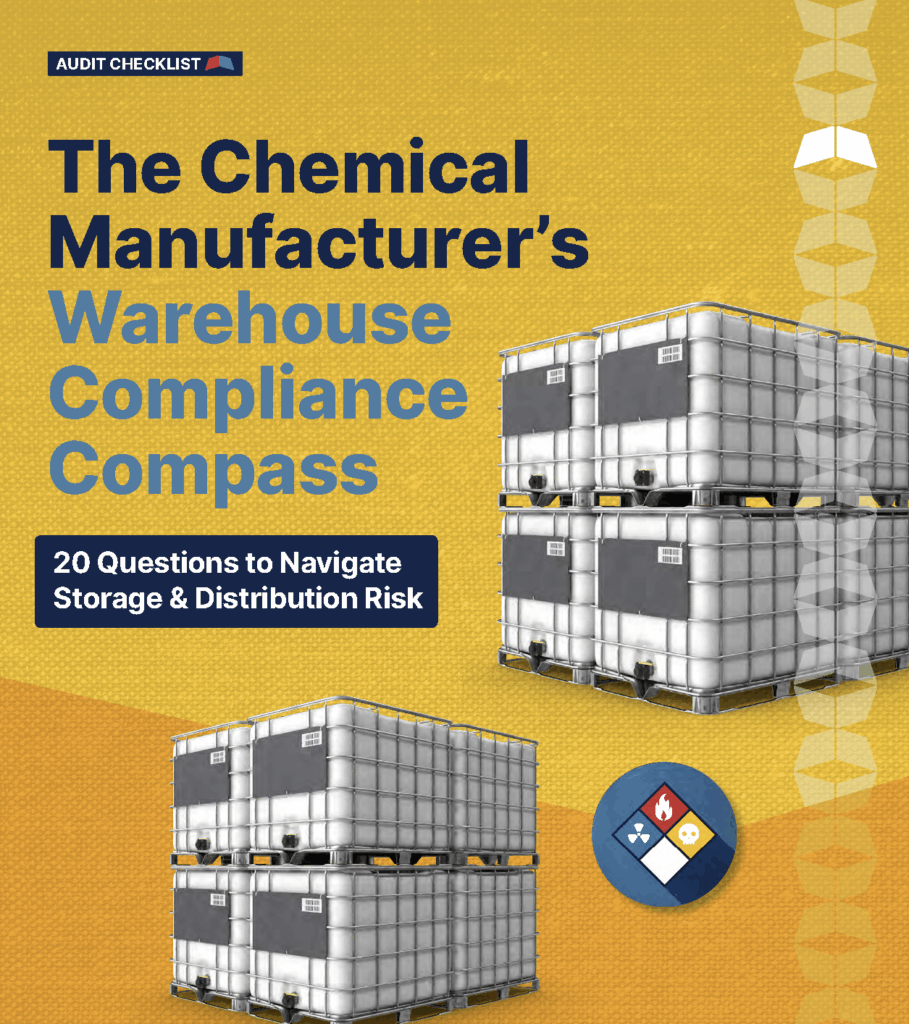
Is your chemical storage audit-ready?
This guide provides 20 critical questions across 4 compliance areas. Benchmark your operations against industry leaders and discover what best-in-class chemical warehousing looks like.
Chemical logistics certifications and programs
The most widely recognized management system for certifications in manufacturing and logistics operations include ISO 9001 for quality, ISO 14001 for environmental management, ISO 45001 for occupational health and safety. These establish structured frameworks for how an organization operates, audits itself, and improves over time.
Industry-specific programs like Responsible Care® address what ISO standards don’t: the specific risks, handling requirements, and community obligations that come with chemical logistics operations. For a chemical 3PL, these programs are a direct signal of whether a provider has built its operation around chemical logistics specifically.
Learn more about these programs below:
Chemical compliance and hazmat handling resources


Hazmat Logistics Frequently Asked Questions
What is chemical compliance?
Chemical hazmat compliance refers to the practices, training, documentation, storage controls, and regulatory requirements needed to safely handle hazardous chemical products in warehousing and transportation environments.
What should a hazmat warehouse include?
A hazmat warehouse should include appropriate containment, compatible storage practices, employee training, emergency response planning, SDS access, labeling procedures, documentation controls, and transportation readiness.
What certifications should a chemical 3PL have?
Relevant chemical 3PL certifications and programs may include Responsible Care®, Responsible Distribution®, Operation Clean Sweep®, DOT hazmat training, HAZWOPER, IMDG, IATA, and applicable OSHA, EPA, and DHS compliance practices.