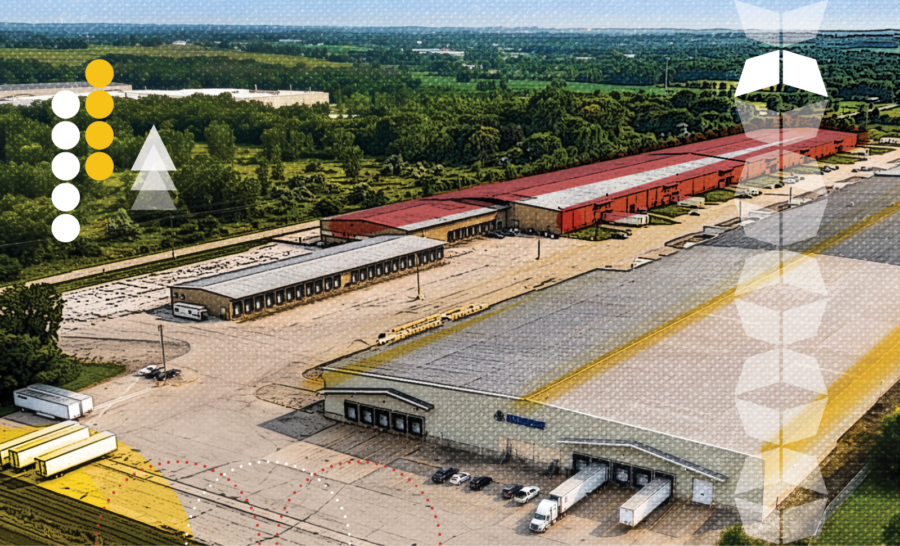
Distribution and Fulfillment for Manufacturers and B2B Shippers
A manufacturer releasing components to a plant and a supplier replenishing a retailer’s distribution center both depend on fulfillment. Each order requires the correct inventory prepared to the recipient’s specifications and delivered within an agreed window. The shipment might contain a single replacement part, several pallets, or a full truckload.
Distribution and fulfillment connect those individual orders with the warehouse and transportation network that serves them. How that connection operates affects production continuity, inventory availability, and the ability to meet customer commitments.
What do distribution and fulfillment mean?
Distribution is the planned movement and positioning of goods between facilities and customers. Fulfillment is the work required to complete a specific order or material release, including inventory allocation, picking, preparation, and shipment confirmation.
The activities overlap. For example, a warehouse receives full loads of finished goods, holds them by lot, and releases smaller quantities to distributors over several weeks. Distribution establishes where inventory is held and how it moves. Fulfillment turns each customer requirement into an executable shipment.
Warehousing and distribution services offer the receiving capacity, storage, and inventory controls that make this possible. But the stock on hand only becomes useful when the business knows its condition and can release it correctly.
How the order fulfillment process works
The order fulfillment process follows a similar sequence. A warehouse receives the order, processes it, picks inventory, prepares the shipment, and arranges dispatch. Industrial and B2B requirements define the details at every stage.
An order fulfillment process includes the following steps.
Receive and validate the order
Orders may arrive through electronic data interchange (EDI), an enterprise resource planning (ERP) system, a customer portal, or an approved manual process. A purchase order or production release needs clear quantities and units of measure, delivery requirements, and any customer-specific instructions.
For example, a request for 20 cases must translate correctly into the warehouse’s inventory units. An order accepted in the wrong unit creates problems before picking begins.
Allocate eligible inventory
Processing determines which inventory can satisfy the order and where it should ship from. The nearest warehouse is not automatically the right choice. The decision is typically affected by available stock, lot requirements, quality holds, handling capabilities, and transportation schedules.
A system might show 100 pallets in the building while only 60 are available for release. Allocation must respect that difference.
Pick and verify the product
Picking may involve full pallets, mixed cases, paper rolls, or components staged for production. Verification connects the physical product to the order, including the required SKU and quantity and, where applicable, lot or serial information.
Equipment must suit the commodity. A paper roll and a pallet of packaged ingredients require different material handling equipment and methods, even when both leave through the same dock.
Prepare the shipment
Preparing the shipment may include pallet building, protective packaging, labeling, or approved value-added work. Retail orders often require specific case packs and pallet configurations. Industrial shipments may need product documentation or load protection suited to their dimensions and weight.
The warehouse should confirm those requirements before staging freight. Correcting a labeling problem after loading creates avoidable handling and delay.
Dispatch and reconcile
Shipping connects warehouse readiness with carrier arrival, destination appointments, and required documentation. Shipment confirmation should reflect what actually left the building, including shortages or substitutions approved by the customer.
Delivery exceptions and returns also need defined ownership. Returned or damaged goods should be inspected and assigned an approved disposition before becoming available inventory again.

How requirements differ by shipment type
Distribution and fulfillment services need to fit the product and its destination. These examples illustrate why a general picking-and-shipping process requires specific work instructions.
| Shipment type | Typical fulfillment requirement | What warehousing and distribution must support |
| Manufacturing materials and components | Release quantities against production requirements and approved material status | Accurate inventory records, controlled staging, and coordinated plant deliveries |
| Finished goods for distributors | Build pallet or case orders using the correct SKU and lot | Storage by product characteristics, stock rotation, and reliable outbound capacity |
| Large-scale retail replenishment | Follow purchase orders, case packs, labeling requirements, and receiving appointments | Customer-specific preparation, shipment data that matches the physical load, and scheduled dispatch |
| Paper, building materials, and other industrial goods | Protect bulky, heavy, or damage-sensitive products during picking and loading | Suitable floor or rack storage, specialized equipment, and safe loading plans |
| Chemicals or other regulated products | Release authorized inventory with required handling and documentation | Product-compatible storage, trained personnel, and controls appropriate to the commodity and facility |
A facility’s ability to store a product does not mean that it can perform every required service. Before choosing a 3PL warehouse, shippers should confirm product acceptance, equipment, and site-specific capabilities.
Distribution center vs. fulfillment center
A distribution center typically moves larger quantities to businesses, such as retailers, distributors, or manufacturing plants, on a replenishment or release schedule. A fulfillment center is usually built around individual orders, often shipped to consumers. Many industrial facilities handle some of both, so the label matters less than whether the building is set up for the orders it actually receives.
What makes distribution and fulfillment centers effective?
Distribution and fulfillment centers must support movement as well as storage. Usable capacity depends on the receiving doors, staging areas, travel paths, and equipment available to handle the workload.
Inventory placement affects execution. Effective facilities keep frequently released materials accessible, prevent slow-moving stock from blocking production-critical inventory, and, where rail service is available, receive larger inbound quantities and hold them for later truck delivery. Storage and release planning stay closely connected.
In essence, they ensure that storage and release planning are closely connected.
Transportation costs make these decisions even more important. For example, the National Association of Manufacturers’ Q3 2026 survey found that 77.3% of respondents cited freight rates as a challenge. A low storage rate offers limited value if poor release planning leads to partial loads, missed appointments, or emergency transportation.
What does an “in fulfillment” status mean?
“In fulfillment” generally indicates that an accepted order has entered warehouse execution, such as picking or shipment preparation. It does not necessarily mean the freight has shipped.
Status definitions vary by company and system. An “awaiting fulfillment” order may be ready for warehouse work, or it may still face an inventory or quality exception. “Awaiting dispatch” usually means preparation is complete, but carrier collection remains outstanding.
The most useful information is the underlying milestone and any exception affecting the promised date. It helps when order acceptance, allocation, warehouse completion, and carrier departure are distinguishable. Change and cancellation rules should also be explicit rather than inferred from a status label.
Technology connects the order to the warehouse
An ERP, warehouse management system, and transportation system need consistent product identifiers and units of measure. They also need agreed rules for inventory holds, order changes, shipment confirmation, and failed data exchanges.
Connected logistics technology makes those events visible. The physical process must still match the record; a pallet moved without a recorded location change creates uncertainty that another dashboard cannot resolve.
Performance measures should reflect the service promise outlined in a servive-level agreement (SLA). This includes items like inventory accuracy, complete and on-time shipments, damage, and appointment performance.
How omnichannel fulfillment fits in
Businesses serving consumers alongside retail accounts have additional requirements. Omnichannel fulfillment services address that model, connecting direct-to-consumer, marketplace, and retail fulfillment.
Kase is part of the WSI family of brands. WSI introduced the Kase brand in 2025 following its acquisition of ShippingTree in 2024. The relationship gives brands access to specialized DTC, retail, and ecommerce fulfillment expertise, while WSI’s industrial focus centers on warehousing and distribution requirements tied to manufacturers and business customers.
Reliable fulfillment starts before an order is picked
Distribution and fulfillment succeed when inventory positioning and warehouse execution support the recipient’s needs. A correctly picked order still falls short if it arrives after a production window or cannot be accepted at the receiving dock. The strongest model connects storage decisions to each release, with clear accountability for the freight and the information that travels with it.

About the Author

Alyssa Wolfe
Alyssa Wolfe is a content strategist, storyteller, and creative and content lead with over a decade of experience shaping brand narratives across industries including retail, travel, logistics, fintech, SaaS, B2C, and B2B services. She specializes in turning complex ideas into clear, human-centered content that connects, informs, and inspires. With a background in journalism, marketing, and digital strategy, Alyssa brings a sharp editorial eye and a collaborative spirit to every project. Her work spans thought leadership, executive ghostwriting, brand messaging, and educational content—all grounded in a deep understanding of audience needs and business goals. Alyssa is passionate about the power of language to drive clarity and change, and she believes the best content not only tells a story, but builds trust and sparks action.