Railcar Loading Standards That Prevent Freight Damage
Railcar loading is a damage-prevention decision. A paper roll that shifts can lose its usable edge or core; a poorly restrained building-material load can put a receiving crew in the path of falling freight. The cost reaches beyond the damaged units to inspection, production disruption, claim investigation, and time spent holding the car.
The Association of American Railroads (AAR) publishes distinct methods for closed cars, open-top cars, and intermodal equipment. Its closed-car loading publications include Circular 42-P, minimum standards for general-purpose boxcars updated in March 2026, and commodity-specific guidance such as June 2026 best practices for roll paper.
A manufacturer should choose the applicable method for its commodity, car, and packaging before issuing a load plan.
Why railcar loading differs from truck loading
Rail freight faces repeated switching and coupling forces during a journey. A car may change railroads, pass through yards, and wait at interchange points. Loads that appear stable at departure can move longitudinally or laterally as the car travels. A truck restraint scheme cannot automatically be carried over to a boxcar or centerbeam.
Billy Vance, WSI’s Director of Rail Relations, described this in a May 2026 interview: a move from Wisconsin to Texas can pass through multiple railroad handoffs, while the car and its contents continue to move and rock in transit. The practical consequence is to plan for the entire route, including switching, rather than the short movement from a dock to the first rail yard.
Equipment also changes the problem. Roll paper in a boxcar needs attention to load pattern, spacing, and protection of edges and cores. Lumber on a centerbeam has a different securement method. Bagged ingredients and palletized chemical products call for their own assessment of package integrity, weight distribution, and approved restraints. The car’s capacity alone does not establish that the load is safe.
What do AAR loading standards cover?
AAR’s Damage Prevention and Loading Services develops and tests loading methods and materials for freight in closed cars and intermodal equipment. Its publications address general loading rules as well as methods for particular products; open-top loading rules are a separate set.
The loader must identify which rules apply and confirm that the current publication, approved materials, and car type match the actual shipment.
If freight arrives damaged, AAR compliance is evidence of a disciplined loading process. Even so, it is not an automatic guarantee that a railroad will pay a claim. The cause, condition at origin and destination, transportation documents, notice, and the governing contract also matter.
Not every accessorial charge is a loading fine either: demurrage charges apply when railcars are held beyond the allowed time. Charges for defective or noncompliant loads depend on the railroad’s rules and the specific loading issue. The most important questions goes beyond AAR compliance. “Which published method was selected, how was it executed, and what record shows the condition of the car and freight at each handoff?”

Five railcar loading execution points
1. Know the applicable rules. Start with the commodity, packaging, railcar, and route. Check the relevant AAR publication and railroad requirements, including any hazardous-material requirements where applicable. Train the crew on the actual loading method, not a generic rail checklist. When a product or package changes, review the method again.
2. Match the physical load to the plan. A load diagram has little value if the weights, unit counts, pallet pattern, or door clearances differ on the floor. Confirm the car’s condition, the proposed distribution of weight, the position of heavier units, and the sequence for installing restraints. Pause when substitute packaging changes the plan rather than improvising a new pattern at the rail door.
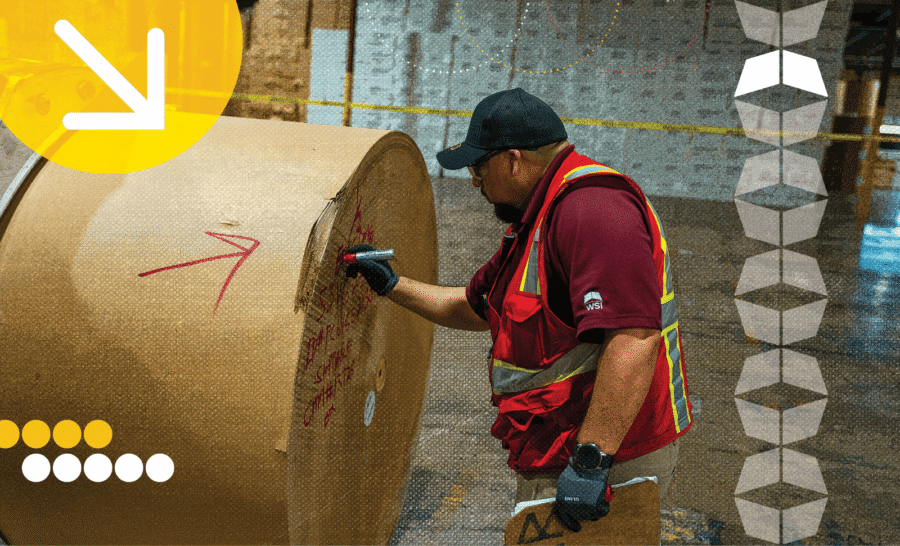
3. Place freight for stability and safe unloading. Loading decisions affect the receiving crew as much as the shipment in motion. Protect doorways and account for freight that could shift toward an opening. For roll paper, protect the usable surface and core, and ensure handling equipment and clamp pressure fit the roll. A crushed core can prevent a customer from feeding the roll into its equipment even if the rest of the paper looks sound.
4. Use the specified dunnage and restraints. Air bags, blocking, bracing, friction materials, and straps have different jobs and limits. Follow the approved method for placement and application rather than treating dunnage as filler for a visible gap. AAR publishes product verification lists alongside its closed-car methods; the selected materials should match the load plan and the current guidance.
5. Make verification a second-person task. A trained checker should compare the finished car with the plan before release, including restraint placement, counts, clearances, seals, photos, and exceptions. A receiving team should then photograph the unopened or just-opened doorway, note shifted freight, and document damage before moving product. This is a control at both ends, not an expectation that one operator can remember every detail.
How does execution affect the total cost?
Damage prevention during railcar loading protects usable inventory and the labor already invested in making and transporting it. For example, a paper manufacturer may need to trim a roll with damaged edges, while a severely damaged core can make the roll unusable for its intended process. Even material that can be recycled has already consumed freight, handling, and time. The Federal Railroad Administration identifies paper, chemicals, construction materials, and other heavy industrial commodities as substantial parts of the carload network, so these are recurring operating questions.
Documentation also narrows disputes. In the interview, Vance described WSI’s receiving practice:
- Photograph the doorway before unloading
- Record damage against the railcar and shipment identifiers
- Notify the customer and carrier of a potential exception
- Provide the observations the shipper needs for a claim
Finally, a team that has a safe unloading plan can avoid wasting free time deciding what to do with a shifted load. Faster action can reduce exposure to demurrage, although no loading practice by itself eliminates charges caused by railroad placement, inventory decisions, or a congested receiving schedule.

Turn a standard into a repeatable process
A capable operator can show the current method used for each commodity, who approves exceptions, how crews are trained, and how the origin and destination teams record condition. For paper, that includes clamp handling and inspection of edges, wrap, and core; for building materials, it includes the applicable restraint and unloading sequence. Ask for an example of a documented exception and how the operator changed the process afterward.
Railcar loading requires specialized rail expertise on the floor in addition to the rulebook in the office. Manufacturers evaluating a rail partner should ask about loading protocols, training, inspection records, and damage trends by commodity.
WSI’s rail-served warehouse network connects those operating controls with receiving, storage, and final distribution. For a proposed lane or commodity, contact WSI to discuss the loading and receiving requirements.
About the Author

Alyssa Wolfe
Alyssa Wolfe is a content strategist, storyteller, and creative and content lead with over a decade of experience shaping brand narratives across industries including retail, travel, logistics, fintech, SaaS, B2C, and B2B services. She specializes in turning complex ideas into clear, human-centered content that connects, informs, and inspires. With a background in journalism, marketing, and digital strategy, Alyssa brings a sharp editorial eye and a collaborative spirit to every project. Her work spans thought leadership, executive ghostwriting, brand messaging, and educational content—all grounded in a deep understanding of audience needs and business goals. Alyssa is passionate about the power of language to drive clarity and change, and she believes the best content not only tells a story, but builds trust and sparks action.