Inventory Management Resource Center
Inventory management is critical for driving efficiency and resilience in today’s logistics climate. Between demand volatility, tighter margins, and ongoing supply chain challenges, organizations can’t afford inventory mismanagement.
With accurate forecasting, real-time visibility, and disciplined inventory control, businesses protect service levels while managing costs, keeping their operations agile as conditions change.

Key inventory management methods & concepts
Just-in-time (JIT)
Aligns inbound inventory with actual demand, reducing carrying costs and minimizing excess stock while requiring tight coordination across suppliers and transportation.
ABC analysis
Prioritizes inventory by value and velocity, so teams focus controls, space, and effort on the SKUs that matter most.
FIFO (first-in, first-out)
Moves the oldest inventory first to protect product integrity, reduce obsolescence, and support accurate inventory valuation.
LIFO (last-in, first-out)
Ships the most recently received inventory first; more common for accounting purposes and tax advantages than physical flow in warehouses.
Economic order quantity (EOQ)
Uses data to balance ordering and holding costs. Helps businesses order the right amount at the right time.
Safety stock
Provides a buffer against demand spikes, supplier delays, and transportation disruptions without overcommitting capital.
Cycle counting
Replaces disruptive annual physical counts with frequent, targeted checks that improve accuracy and operational continuity.
Materials requirements planning (MRP)
Connects inventory planning to production schedules and demand forecasts to ensure materials are available when needed.
Inventory accuracy
Ensures system data matches physical inventory. Allows organizations to confidently plan, fulfill, and lower operating risk.
Demand forecasting
Uses historical data and trends to anticipate future demand and guide smarter, more informed inventory decisions.
Barcode and RFID systems
Automates tracking and reduces manual errors across receiving, storage, and shipping.
Cloud-based inventory platforms
Delivers real-time visibility, system integration, and faster decision-making across the network.
Inventory management technology
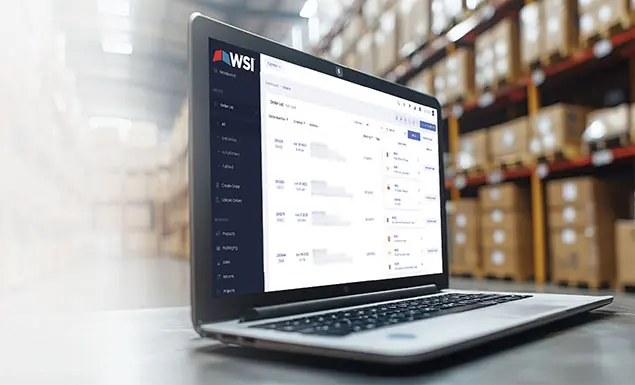
Technology has become an integral part of inventory management. In addition to delivering visibility and accuracy, it provides control over increasingly complex supply chains. Leading organizations rely on integrated platforms and advanced analytics to respond faster to demand shifts, reduce cost exposure, and maintain service levels. The right logistics partner brings not only operational expertise, but also a technology stack built to scale.
|
Technology capability |
What it enables |
|---|---|
|
Real-time inventory visibility |
Live views of inventory levels, locations, and SKU velocity across facilities, supporting faster decisions and fewer surprises. |
|
AI-powered forecasting and demand planning |
Predicts inventory needs by region, seasonality, and promotions to reduce stockouts, limit overstock, and improve working capital efficiency. |
|
Centralized, integrated systems |
Unified data across WMS, ERP, OMS, and 3PL platforms to ensure accuracy, alignment, and cross-functional collaboration. |
|
Scalable, modular platforms |
Flexible technology that adapts as businesses grow, with the ability to add returns, compliance, sustainability, or reporting functionality. |
|
Advanced reporting and analytics |
Predictive and prescriptive insights that support smarter procurement, fulfillment optimization, and benchmarking against industry standards. |
|
Automation and tracking tools |
Barcodes, RFID, IoT sensors, and robotics that improve accuracy, reduce manual errors, and speed up cycle counts and fulfillment. |
|
Traceability and compliance tools |
Enhanced tracking for audits, recalls, and regulatory requirements, especially critical in highly regulated industries. |
Technology capability
Real-time inventory visibility
What it enables
Live views of inventory levels, locations, and SKU velocity across facilities, supporting faster decisions and fewer surprises.
Technology capability
AI-powered forecasting and demand planning
What it enables
Predicts inventory needs by region, seasonality, and promotions to reduce stockouts, limit overstock, and improve working capital efficiency.
Technology capability
Centralized, integrated systems
What it enables
Unified data across WMS, ERP, OMS, and 3PL platforms to ensure accuracy, alignment, and cross-functional collaboration.
Technology capability
Scalable, modular platforms
What it enables
Flexible technology that adapts as businesses grow, with the ability to add returns, compliance, sustainability, or reporting functionality.
Technology capability
Advanced reporting and analytics
What it enables
Predictive and prescriptive insights that support smarter procurement, fulfillment optimization, and benchmarking against industry standards.
Technology capability
Automation and tracking tools
What it enables
Barcodes, RFID, IoT sensors, and robotics that improve accuracy, reduce manual errors, and speed up cycle counts and fulfillment.
Technology capability
Traceability and compliance tools
What it enables
Enhanced tracking for audits, recalls, and regulatory requirements, especially critical in highly regulated industries.
The importance of inventory accuracy
Inventory accuracy is the foundation of reliable warehousing, distribution, and fulfillment, ensuring inventory data reflects what is physically on the warehouse floor. When accuracy breaks down, the impact spreads quickly: driving markdowns, write-offs, expedited freight, missed service commitments, and hidden labor and transportation costs.
In industrial and regulated environments, these errors are especially costly, with no margin for clearance strategies or recovery. Consistent processes, disciplined execution, and the right technology are the most effective ways to prevent these risks and protect service, margins, and customer trust.

Inventory accuracy KPI calculator
Simple Method
Basic inventory accuracy calculation
Formula:
(Physical Count / Recorded Count) × 100
Variance-Based Method
Detailed accuracy with variance tracking
Formula:
[1 – (Total Variance / Total Recorded)] × 100
Calculate Total Variance:
Sum absolute differences (shortages + overages)
Example: 10 short + 2 over = 12 variance
While the average manufacturer achieves just 83% inventory accuracy, WSI clients consistently hit 99.8%+. That 16+ percentage point difference is the difference between lost revenue and reliable operations. (source)”
Top inventory challenges to look out for

Inaccurate inventory data
When system records don’t match physical stock, errors cascade across labor planning, transportation, and order fulfillment, leading to stockouts, write-offs, and costly expediting.

Demand volatility and forecasting gaps
Sudden shifts in demand can quickly expose weak forecasting, resulting in excess inventory in the wrong locations or shortages that disrupt service levels.

Lack of real-time visibility
Limited insight across facilities and partners makes it difficult to respond to disruptions, balance inventory, or make confident decisions as conditions change.
Tips, tricks, and guides









With a 99.9% inventory accuracy rate, WSI gives organizations the confidence to plan, fulfill, and scale without second-guessing their data.”