Technology That Strengthens Logistics Execution
WSI’s technology supports the data-driven execution that keeps warehousing and distribution operations moving. From inventory transparency and order activity to shipment documentation and freight coordination, our systems are built to help customers operate with greater control, accuracy, and confidence.
For manufacturers, distributors, and shippers, that means better access to actionable information, real-time operational oversight, and a more connected logistics experience.
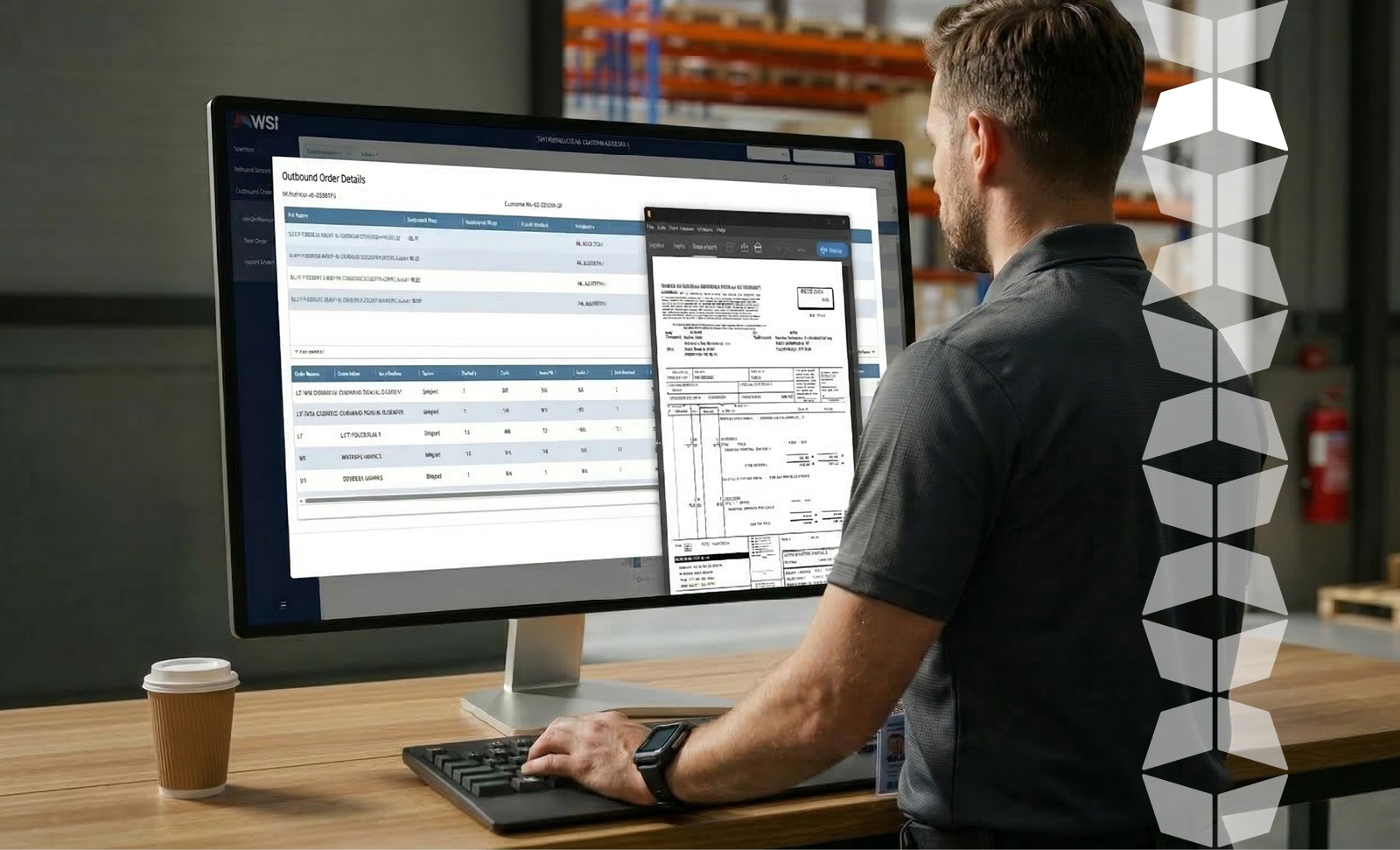
Logistics technology built for industrial operations
WSI runs on enterprise-grade systems configured for industrial operations, backed by an in-house team, and built to work the way you do.
Enterprise WMS, without the enterprise overhead
EDI and API integrations with major ERPs
Security infrastructure built for regulated industries
Configured for your operation, not a generic default
WSI’s public warehouses operate on an enterprise-grade warehouse management system. Single tenant warehouses and in-plant operations may run on WSI’s tech stack or a customer’s own ERP for a more integrated approach.
WSI’s transportation operations run on purpose-built TMS and freight security technology supporting smarter routing, real-time freight visibility, and carrier selection from a verified network.
WSI’s warehouse technology is built to support control at every stage of the operation. Through the WSI Portal, Customers can review inventory, track order activity, and access shipment information through one connected portal experience.
Inventory management & network intelligence

Clearer insight across facilities
Real-time data integrity is the cornerstone of the WSI technology experience. Customers need fast access to what is in stock, where it is located, and how inventory is moving across the network. WSI’s tech stack supports detailed product tracking, including lot, serial, and reference-level information.
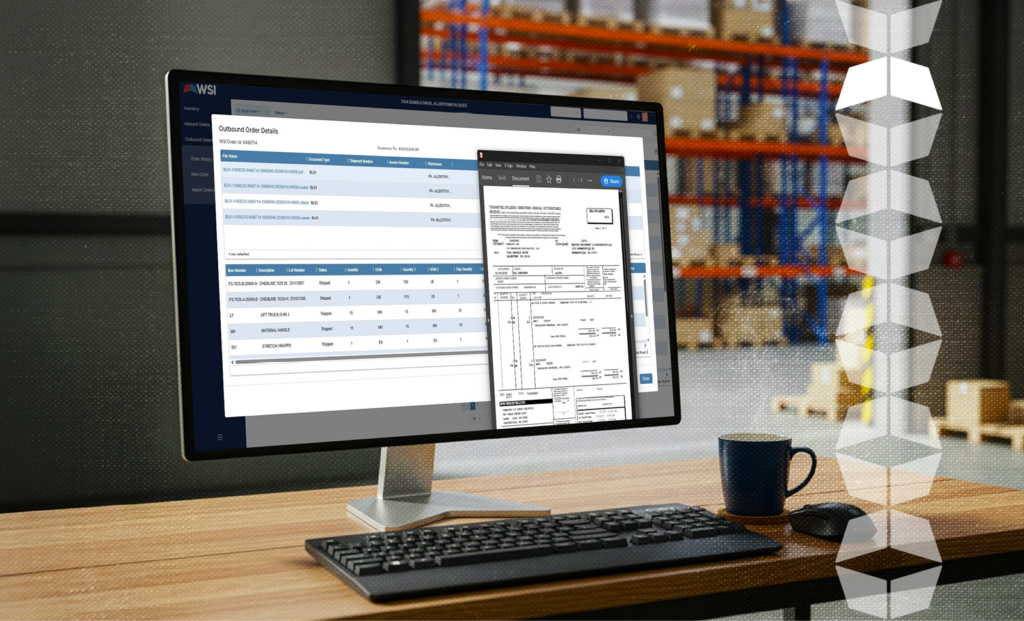
Customer portal visibility
The WSI Portal provides summary views, item-level detail, and exportable data that can be accessed at any time. For customers operating across multiple warehouses, this unified view provides a single source of truth.
As WSI continues to invest in visibility technology, the focus remains on making inventory data more accurate and easier to interpret, facilitating better decision-making.
The WSI advantage: High-utility customization
Unlike rigid, “one-size-fits-all” platforms, WSI’s customer portal interface is built for personalization. The hero of this system is the ability to save “Quick-Views,” allowing users to bypass data noise and surface the specific KPIs your role requires in a single click. Whether you are a floor manager tracking hourly output or a director monitoring network-wide inventory, the system adapts to your workflow.

Inbound order management
The portal allows customers to create inbound orders and provide advance notice of incoming shipments. This helps warehouse teams prepare for receiving, creates a clearer record of what inventory is expected into the facility, and allows customers to review inbound activity in real-time to anticipate labor needs.

Outbound order management
Customers can create outbound orders based on available inventory and scheduled shipping activity. Orders can be entered individually or uploaded in batches using a structured template, ensuring high order accuracy through automated validation.

Shipment history and documentation access
The portal provides access to order history, shipment activity, and supporting documents such as receipt notices and bills of lading. This allows customers to quickly retrieve records when needed via a secure, self-service digital archive.
Systems integration & enterprise connectivity
Seamless data exchange across the supply chain
Warehouse performance depends on more than what happens inside the building. It also depends on how clearly information moves through the supply chain and how easily customers and WSI teams can synchronize operations.
WSI’s integration layer helps support that flow by structuring how orders are entered, configuring accounts around how each customer operates, and presenting information in ways that are easier to use. Whether via EDI, API, or flat-file transfer,, the interface can be aligned to the customer’s warehouse locations, reporting needs, and preferred data fields, so the experience reflects how their operation works.
When order and inventory information enters the system in a clear, consistent format, warehouse teams can move more quickly into execution. It reduces time spent correcting avoidable issues and helps ensure the right information is available when the work begins.
Documentation you need, when you need it
A 3PL that holds itself to a high compliance standard brings that same standard to everything it handles for you.
Whether you’re dealing with a customer audit, a compliance review, or just reconciling what shipped last week, you need documentation you can access quickly and trust to be accurate.
WSI’s systems maintain receipt records, bills of lading, shipment history, and lot and batch-level traceability where required.
For customers in chemicals and other regulated verticals, WSI also uses dedicated environmental compliance infrastructure to manage our own site-level obligations, including Tier II reporting, permit tracking, and hazardous materials documentation.
WSI maintains a rigorous security posture to ensure that while your data is accessible to you, it remains protected against external threats through encrypted data transfers and secure user authentication protocols.

Freight brokerage technology
WSI’s transportation tech stack supports coordinated shipment planning, carrier management, and freight visibility.
- Real-time visibility across active shipments with proactive status updates
- Carrier selection from a verified network continuously screened for safety, legitimacy, and performance
- Route optimization that reduces miles and improves on-time delivery
What technology enables across the WSI ecosystem
Mobile-ready access
Logistical oversight shouldn’t be tethered to a desk. The WSI portal is fully responsive, allowing operations managers and field teams to pull real-time inventory levels or shipment statuses directly from a tablet or smartphone on the warehouse floor.
Network-wide oversight
Customers gain access to inventory, order activity, shipment history, and supporting documentation across their WSI warehouse locations. This creates a clearer view of what is happening across the network without relying on manual updates or fragmented reporting.
Standardized execution
Technology supports consistent SOPs and operating procedures across facilities. That helps maintain accuracy, improve coordination between teams, and create more predictable performance.
More efficient order coordination
Inbound and outbound orders can be entered, reviewed, and tracked through a streamlined process. This reduces manual back-and-forth while helping ensure cleaner order data before warehouse execution begins.
Stronger documentation and traceability
Shipment records, receipt notices, bills of lading, and inventory reference data are accessible in one place. This supports compliance requirements, audit readiness, and clearer documentation for regulated industries.
Scalable logistics infrastructure
WSI’s technology environment supports growth across facilities and increasing order volume. This provides a digital foundation that expands seamlessly alongside your physical footprint.
Reliable implementation and rapid onboarding
We understand that technology is only an asset if it’s active. WSI utilizes a standardized integration framework designed to reduce the typical “go-live” window. By leveraging pre-configured EDI and API templates for major ERP systems, our dedicated IT onboarding team ensures that your data is flowing and your teams are trained without the long lead times common in 3PL transitions.
Questions to ask 3PL candidates
Questions to ask your own team
From Discovery to Data-Sync
For most manufacturers, outsourcing warehousing and logistics means gaining operational capacity without the overhead of running a distribution center. For those with complex operations or plant-adjacent facilities, the priority is finding a 3PL capable of operating within their existing systems and infrastructure.WSI supports both. Our public warehousing and dedicated facilities are built around the technology requirements of the customer, not a one-size-fits-all platform.
Evaluating that fit starts with the right questions.

If you’re working through 3PL evaluation, the questions above are a starting point. Our Risk-https://www.wsinc.com/manufacturing-risk-proof-3pl/Free 3PL Selection Framework walks through the full vendor vetting process from capability assessment to contract terms to go-live planning.
Technology that strengthens supply chain performance
WSI’s technology is built to strengthen the fundamentals of warehousing, distribution, and logistics execution. It gives customers better access to information, improves how inventory and orders are managed, and supports a more connected warehouse experience.
As WSI continues to invest in this area, the focus remains on practical improvements that support visibility, accuracy, and stronger day-to-day performance.