What Manufacturers Need to Know About Downstream Logistics
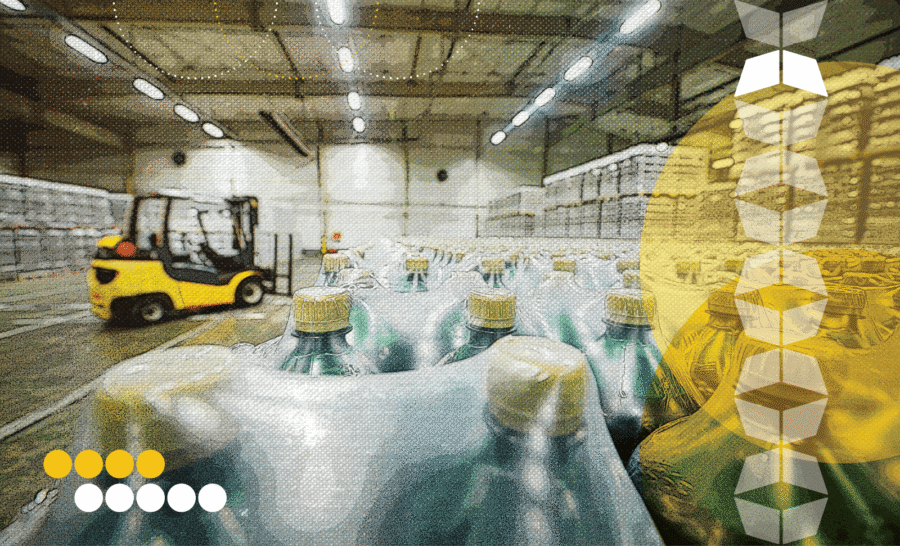
A production run finishes on schedule. The product clears quality control, inventory is received into the system, and the customer’s delivery window is on the calendar. Then the pressure shifts. Finished goods need to be staged, stored, picked, shipped, tracked, and delivered without disrupting the customer relationship or tying up cash in the wrong place.
That handoff is where downstream logistics begins.
In manufacturing, the work does not end when goods leave the production line. In many ways, that is when the supply chain becomes more visible to the customer. A late shipment, damaged pallet, poor inventory count, or missed delivery appointment can quickly overshadow strong production performance. Downstream logistics connects manufacturing output to the market, making it one of the most important parts of the supply chain to understand and manage, and more importantly, improve.
What is downstream logistics?
Downstream logistics refers to the movement, storage, handling, and delivery of finished goods after production. It covers the processes that move product from the manufacturer to the next destination, whether that is a distributor, wholesaler, retailer, job site, customer facility, or end user.
In manufacturing, downstream logistics often includes:
- Finished goods warehousing
- Order management
- Inventory control
- Outbound transportation
- Delivery scheduling
- Documentation
- Reverse logistics (when returns or damaged goods need to be handled)
The exact structure depends on the industry, product type, customer requirements, and distribution model.
A building materials manufacturer may ship full truckloads to distributors. A chemical producer may need compliant storage, documentation, and controlled handling. A food manufacturer may need lot-level inventory control and tight rotation. An industrial supplier may ship a mix of palletized freight, parcel orders, and scheduled replenishment.
The common thread is that downstream logistics turns manufactured product into fulfilled demand.

How downstream logistics works within manufacturing
Manufacturing operations are built around planning, throughput, labor, equipment, and quality. Downstream logistics must align with all of those variables while responding to customer requirements outside the plant.
Once finished goods are produced, they typically move into storage or staging. From there, orders are allocated against available inventory and picked according to customer or channel requirements. Then they are prepared for shipment and routed through the appropriate transportation mode. Transportation for some manufacturers may involve rail, truckload, LTL, intermodal, or parcel. For others, it might include specialized handling, appointment scheduling, export documentation, or compliance checks before release.
The strongest downstream logistics operations cross-functional. In other words, they involve production planning, inventory systems, customer service, transportation, and finance. When those teams share accurate information, manufacturers can make better decisions about what to produce, where to store it, when to ship it, and how to serve customers without adding unnecessary cost.
That connection matters because logistics costs are substantial. CSCMP’s State of Logistics reporting has placed U.S. business logistics costs in the trillions, equal to roughly 8.7% of the national GDP in recent reporting. Put plainly, that makes outbound execution a major cost center and a direct influence on margin.
Downstream logistics vs. upstream logistics
The easiest way to understand downstream logistics is to compare it to upstream logistics.
Upstream logistics focuses on what comes into the manufacturing operation. It includes the movement of raw materials, parts, ingredients, packaging, components, and other inputs needed to make a product. Sitting on the upstream side are supplier relationships, inbound freight, purchasing, receiving, and raw material availability.
Downstream logistics focuses on what happens after production. It includes the storage (for example, chemical or manufacturing warehousing), handling, and movement of finished goods out to customers or channel partners.
Both sides are connected. If upstream logistics fails, production can stall. If downstream logistics fails, finished goods can pile up, customer commitments can slip, and revenue can be delayed. Manufacturers need both to work in rhythm.
The difference is visibility. Upstream disruption is often felt inside the operation first. Downstream logistics problems are often felt by the customer first. That makes outbound performance especially important for manufacturers competing on service, reliability, and long-term account relationships.
Why downstream logistics matters to manufacturers
Manufacturers have always cared about getting product out the door. What has changed is the level of precision required.
Customers expect clearer delivery dates and faster issue resolution. They also want better communication when things change. There are growing complexities as well: Retailers and distributors often have strict receiving requirements. Industrial customers may plan labor or installation around delivery timing. In regulated sectors, the paperwork and handling process can be just as important as the shipment itself.
At the same time, manufacturers are facing greater supply chain uncertainty. Deloitte’s 2026 Manufacturing Industry Outlook noted that trade and tariff uncertainty increased costs for U.S. manufacturers in 2025, with many companies responding by front-loading inventory or reevaluating supply chain structures. That kind of volatility does not stop at procurement. It changes how manufacturers think about inventory positioning, warehouse capacity, transportation planning, and customer commitments.
Strong downstream logistics helps manufacturers protect service levels while controlling cost. It supports better inventory availability, fewer delays, more accurate order fulfillment, and stronger visibility into outbound movement. It can also reduce pressure on the plant by preventing finished goods from sitting too long in production space or creating bottlenecks at the dock.
Poor downstream logistics creates the opposite effect. Inventory may be available but hard to locate. Orders may ship late because staging is disorganized. Transportation costs may rise if planning is done too close to the ship date. Customers may receive inconsistent updates. Over time, those issues can erode trust even when the product itself is strong.

A 3PL’s role in downstream logistics
A third-party logistics provider can support downstream logistics by managing the warehousing, handling, transportation coordination, and visibility required after goods are produced. The value, along with outsourced labor or storage space, is operational structure.
A manufacturing 3PL partner can help position finished goods closer to customers, support overflow during demand spikes, manage inventory at the lot, SKU, or pallet level, and coordinate outbound freight across modes.
In more complex environments, a 3PL may also support rail-served warehousing, transloading, export preparation, compliance processes, or customer-specific shipping requirements. The 3PL that offers the best fit depends on the manufacturer’s product profile and operating needs.
Technology also matters. The 2025 MHI and Deloitte industry report found that 55% of supply chain leaders were increasing investments in supply chain technology and innovation, with 60% planning to spend more than $1 million. That investment demonstrates the need better visibility across the full supply chain, including the finished goods side.
In downstream logistics, visibility helps teams understand what inventory is available, where it is located, what has shipped, what is delayed, and what needs attention. Without that information, manufacturers are often forced to react after a customer asks for an update.
A strong 3PL relationship can also create flexibility. Manufacturers may not want to build or lease additional space for every seasonal surge, new customer requirement, or regional opportunity. A 3PL network can provide options without requiring the manufacturer to carry the full fixed cost alone.
Downstream logistics protects the customer promise
Manufacturing creates the product, but downstream logistics delivers the promise attached to it. It determines whether finished goods move efficiently, if customers receive orders as expected, and the manufacturer’s ability to convert production output into revenue without unnecessary friction.
The goal for manufacturers should be to build a downstream operation that supports production, protects margin, improves visibility, and strengthens customer confidence. This requires partners that understand the realities of manufacturing, from inbound pressure and production schedules to finished goods storage and customer delivery expectations.
For WSI, downstream logistics fits naturally into the manufacturing supply chain conversation. With warehousing, transportation coordination, rail-served capabilities, inventory management, and experience supporting industrial and regulated industries, WSI helps manufacturers think beyond storage and build more dependable movement from production to market.
About the Author

Alyssa Wolfe
Alyssa Wolfe is a content strategist, storyteller, and creative and content lead with over a decade of experience shaping brand narratives across industries including retail, travel, logistics, fintech, SaaS, B2C, and B2B services. She specializes in turning complex ideas into clear, human-centered content that connects, informs, and inspires. With a background in journalism, marketing, and digital strategy, Alyssa brings a sharp editorial eye and a collaborative spirit to every project. Her work spans thought leadership, executive ghostwriting, brand messaging, and educational content—all grounded in a deep understanding of audience needs and business goals. Alyssa is passionate about the power of language to drive clarity and change, and she believes the best content not only tells a story, but builds trust and sparks action.