Supply chain disruptions are no longer rare. And the disruption itself, such as extreme weather, port congestion, labor shortages, equipment failures, and geopolitical instability, typically isn’t what breaks down operations. What affects operations most is finding out about a disruption too late to do anything about it.
When things go wrong and teams are working with things like delayed updates or manual check-ins, the data is stale, and the window respond narrows significantly. The consequences compound fast. A missed delivery becomes a customer service problem, or a delay incurs a fee.
An example from recent research highlights the problem: 60% of businesses only discover shipment damage after delivery (or not at all) because they lacked visibility earlier in the process. When problems go undetected that long, response options are already gone.
Real-time supply chain visibility helps logistics teams detect disruptions earlier and evaluate response options faster, allowing companies to maintain operational continuity during unexpected events.
Moreover, understanding why visibility matters during disruptions is the critical first step toward building a more resilient supply chain.
What Good Visibility Looks Like
To put it succinctly, modern supply chains run across dozens of touchpoints, each one a potential point of failure. Good visibility pulls together data from across the supply chain and surfaces it in ways teams can act on.
Without timely data, teams are left making decisions based on incomplete information. They may not know the scope of the disruption, which shipments are affected, or whether inventory can absorb the hit. That uncertainty slows everything down.
Live shipment tracking means logistics teams don’t have to wait for a carrier update to know a load is running late. They can see it developing, assess alternatives, and start coordinating before the delay affects downstream operations, whether that means rerouting freight, adjusting schedules, or proactively contacting customers.
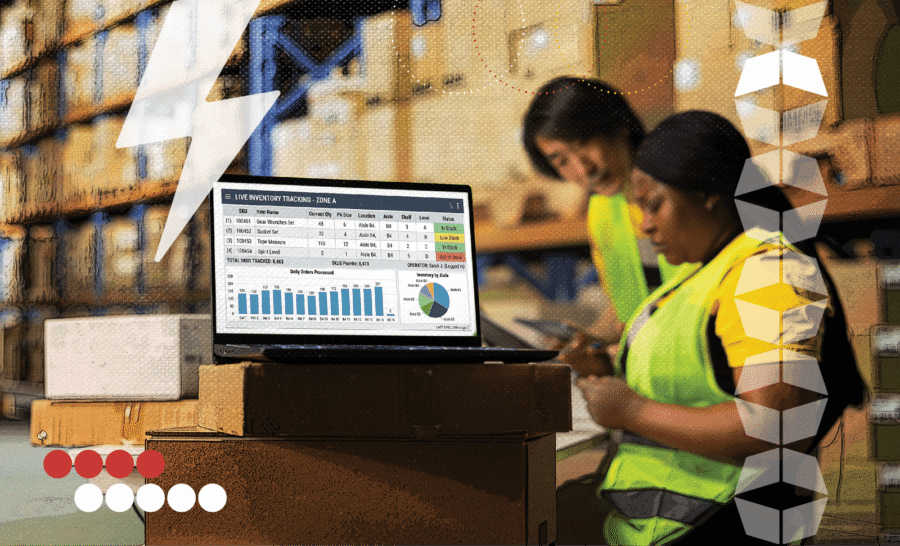
Real-time inventory monitoring tells teams what’s actually on hand across warehouses, distribution centers, and production facilities. During a disruption, that context is critical. It’s the difference between knowing you have a problem and knowing whether you have the inventory to work around it.
Automated exception alerts flag issues the moment conditions fall outside expected parameters. For example, a shipment behind schedule, inventory approaching a critical threshold, or an operational anomaly at a facility.
Early alerts mean teams can respond while options are still open, rather than discovering problems after they’ve already caused damage.
In other words, lack of visibility equals risk.
Real-time supply chain visibility improves situational awareness by providing logistics teams with a clearer picture of supply chain activity as events unfold. With better visibility, organizations can identify emerging issues sooner, coordinate responses across teams, and take corrective action before disruptions escalate.
The Technology Behind Real-Time Supply Chain Visibility
| Capability | What It Does | Business Impact | Real-World Scenario (WSI Industries) |
| Live shipment tracking | Provides continuous location and status updates for inbound and outbound freight | Enables proactive response to delays, improves delivery accuracy, and strengthens customer communication | A chemical manufacturer shipping hazardous materials sees a rail delay due to severe weather. With real-time tracking, a 3PL can reroute or adjust delivery timelines, ensuring compliance and avoiding production shutdowns |
| Real-time inventory monitoring | Tracks inventory levels across warehouses, distribution centers, and production facilities | Supports faster decision-making, prevents stockouts, and enables better allocation of inventory across locations | A paper and packaging manufacturer identifies low stock at one facility and redistributes inventory from another warehouse to prevent production disruption |
| Exception alerts and automated notifications | Sends alerts when shipments are delayed, inventory thresholds are reached, or operational issues occur | Reduces reaction time, improves cross-team coordination, and minimizes downstream disruption | A bulk retail fulfillment client receives an alert that inbound inventory is delayed at port. Teams adjust fulfillment timelines and proactively notify customers to manage expectations |
| Multi-facility visibility | Consolidates data across multiple warehouse locations into a single view | Improves network-wide decision-making and enables smarter inventory positioning | A multi-site industrial distributor uses a 3PL’s network visibility to shift inventory between Midwest and Southeast facilities during regional demand spikes |
| Transportation coordination visibility | Integrates freight brokerage and transportation data with warehouse activity | Aligns inbound/outbound scheduling, reduces dwell time, and improves throughput | A manufacturing client coordinates inbound raw materials with outbound finished goods through a brokerage, avoiding dock congestion and delays |
| Operational condition monitoring | Provides insight into facility activity, capacity, and handling conditions | Enhances operational efficiency and ensures compliance for sensitive goods | A hazmat storage customer monitors storage conditions and handling status to ensure regulatory compliance and safe material management |
Why it matters
Together, these capabilities create a connected, up-to-the-minute views of the supply chain. With the right 3PL, it’s not just information with the warehouse, but across the supply chain, which allows organizations to move from reactive problem-solving to proactive decision-making. Visibility directly supports:
- Safer handling of regulated materials
- Continuity in production and fulfillment
- Faster response to disruptions
- Stronger customer communication and trust

Faster Response Starts with Better Visibility
Visibility changes how organizations respond to disruption. Instead of reacting after problems have already impacted operations, teams can see issues as they develop and act sooner.
Let’s say a shipment is delayed or a disruption begins to unfold. With the right data, logistics teams can evaluate options immediately. This might mean adjusting routes, shifting schedules, or repositioning inventory before delays ripple further downstream. That early awareness creates flexibility, giving teams more time to make better decisions.
The impact extends beyond logistics. Production teams can adjust schedules when inbound materials are running late, helping protect critical orders and avoid unnecessary downtime. Customer service teams can rely on accurate, up-to-date information to communicate realistic delivery expectations, reducing uncertainty and maintaining trust.
In other words, when every function is working from the same real-time data, decisions happen faster and with greater alignment. That’s what prevents small disruptions from becoming larger operational issues.
Visibility Is Only Valuable If You Can Act on It
Technology makes visibility possible, but it doesn’t solve problems on its own. Data can highlight what’s happening across the supply chain but responding effectively requires experience.
Knowing how to react in the moment, whether that means adjusting transportation plans or reworking workflows, comes from understanding how the entire operation fits together. It’s the difference between seeing a problem and solving it.
This is where experienced logistics partners and the right 3PL play a critical role; they can turn real-time information into immediate, informed action using integrated systems and expertise.
Turning Visibility into Resilience
A recent survey of shipping customers found that 76% experienced supply chain disruptions that delayed their business operations in the past year, with 22% reporting more than 20 disruptive incidents in the same period.
Real-time visibility helps create a more resilient supply chain; one that can adapt as conditions change, maintain service levels, and recover more quickly when disruptions occur.
Connect with WSI to explore how greater visibility, combined with experienced operational support, can help your supply chain stay stable when conditions aren’t.
About the Author

Margot Howard
Margot Howard is a Freelance content marketing writer and strategist with 10+ years of experience. Margot worked in corporate sales for many years before transitioning to content marketing. She writes for B2B SaaS, software, and service companies, especially those in shipping and logistics, Sales Tech, and MarTech.