WSI’s Warehouse Wire: March 27, 2026
Your connection to what’s happening across warehousing, transportation, and supply chain operations.
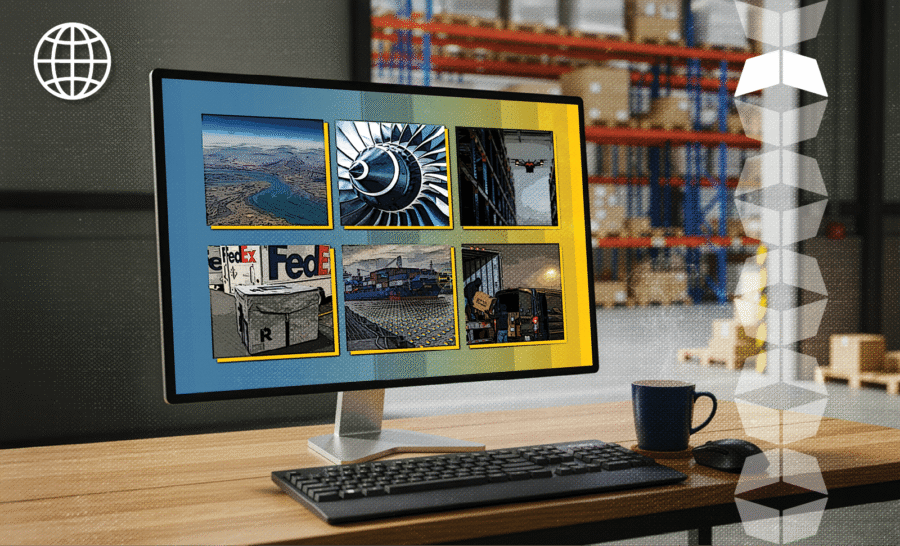
Global trade routes are under pressure as disruptions in the Strait of Hormuz drive volatility across fertilizer and plastics supply chains. Autonomous drones are moving into everyday warehouse operations, AI is becoming embedded in planning decisions, and item-level visibility is emerging as a new standard in cargo security.
At the same time, structural constraints continue to challenge capacity, from aerospace production bottlenecks to rising theft and evolving packaging strategies. This week’s headlines highlight an industry balancing innovation with ongoing disruption, where technology, resilience, and adaptability are increasingly defining operational success.
Check back once a month for timely headlines and practical insights shaping the future of warehousing and supply chain operations.
Strait of Hormuz Disruption Sends Shockwaves Through Fertilizer and Plastics Supply Chains
A prolonged disruption in the Strait of Hormuz is creating ripple effects across global supply chains, with immediate implications for agriculture1 and plastics.2 The waterway typically supports roughly one-third of global fertilizer trade, including a significant share of nitrogen-based inputs like urea. With shipments constrained, U.S. fertilizer prices have surged nearly 30% in recent weeks, hitting just as farmers finalize purchases for spring planting. Because fertilizer is often the largest variable cost in crop production, higher prices may pressure planting decisions, yields, and ultimately food supply chains.
The impact extends beyond agriculture. The same disruption is constraining petrochemical feedstocks such as liquefied petroleum gas and naphtha, both essential to plastics production. Reduced availability is already forcing production cuts in parts of Asia, tightening global supply and increasing cost volatility for plastic-based packaging and materials.
Even with strong domestic production, U.S. markets remain exposed to global pricing shifts. For shippers, this introduces renewed uncertainty across key inputs, from crop-based commodities to packaging, reinforcing the need for flexible sourcing, inventory strategies, and cost management across the supply chain.
Autonomous Inventory Drones Are Reshaping Warehouse Visibility and Efficiency
Warehouse drones are moving from pilot programs to scaled deployments, signaling a shift in how inventory is managed across supply chains. Companies like Kroger3 and Southern Glazer’s4 are using autonomous drones to perform continuous inventory audits, replacing manual cycle counts with high-frequency, system-driven visibility. In cold chain environments, drones can operate in sub-freezing conditions, reducing the need for labor-intensive counts while improving accuracy for time-sensitive goods.
The operational impact is already measurable. Southern Glazer’s has identified tens of thousands of inventory discrepancies through drone scans, while reallocating up to 70 labor hours per week per facility to higher-value work. More frequent inventory validation, moving from quarterly to biweekly or even continuous checks, helps reduce shrink, improve slotting accuracy, and support faster order fulfillment.
For supply chains, this shift strengthens real-time visibility, a critical factor in maintaining service levels and responding to disruptions. As drones integrate directly with warehouse management systems, they enable more reliable data, better forecasting, and tighter inventory control. Over time, this technology is expected to support more agile, data-driven warehouse operations while reducing cost pressures tied to labor and inventory errors.

Aerospace Demand Climbs as Supply Chain Constraints Limit Growth
The aerospace industry is entering 2026 with strong demand across commercial aviation, defense, and space, but supply chain constraints continue to cap growth. Insights from The Aerospace Event 2026 and updated industry data show a widening gap between what manufacturers aim to deliver and what suppliers can support.5
Aircraft and engine shortages remain the most significant bottleneck. Global delivery shortfalls now exceed 5,000 aircraft, while order backlogs have reached more than 17,000, representing years of constrained production. Engine availability in particular is slowing the deployment of completed aircraft, forcing airlines to operate older fleets longer. This is increasing fuel and maintenance costs while limiting capacity expansion.
The strain extends across the broader supply chain. Labor shortages, extended certification timelines, and reliance on limited suppliers for critical components are making disruptions harder to resolve. For logistics and manufacturing networks, this reinforces a familiar challenge: high demand does not translate to throughput without supply chain resilience.
Report Finds AI Becoming a Core Tool for Navigating Supply Chain Volatility
AI is moving beyond experimentation and becoming embedded in day-to-day supply chain decision-making as companies adapt to ongoing volatility. New research from RELEX shows growing confidence in AI, with most organizations now using it to support planning rather than relying on it independently.6 Instead of full automation, companies are applying AI to generate insights that improve speed and accuracy while keeping human oversight in place.
Adoption is accelerating in areas tied directly to operational performance, particularly inventory optimization, forecasting, and logistics planning. Nearly half of organizations are already using or planning AI for supply optimization, reflecting a shift toward more responsive, data-driven networks.
It’s a shift WSI is navigating firsthand. “It’s already influencing how work gets done,” says Sebastian West, WSI’s VP of IT, who is leading the company’s AI governance and enablement efforts. “The organizations that succeed with AI will be the ones that manage it well.”
Ambient IoT Brings Item-Level Visibility to Combat Rising Cargo Theft
Cargo theft is becoming more targeted and costly, with losses reaching $725 million in 2025, driving demand for more advanced supply chain security. New ambient IoT technology is emerging as a solution, giving individual products digital identities and enabling real-time tracking at the item level rather than relying solely on trailer-based GPS.7
Wiliot’s battery-free sensor tags can detect location, movement, and environmental conditions as goods move through warehouses and distribution networks. This allows teams to identify issues like misrouted shipments or unauthorized handling instantly, often before freight leaves a facility. As theft increasingly includes diversion and process breakdowns rather than traditional theft, earlier detection is becoming critical.
Beyond loss prevention, the technology creates a detailed record of product movement, helping reduce disputes between shippers, 3PLs, and insurers. As supply chains grow more complex, item-level visibility is expected to play a larger role in improving accountability, strengthening security, and supporting more reliable operations across logistics networks.
FedEx Introduces Reusable Packaging System for B2B Supply Chains
FedEx has launched a new reusable box solution in partnership with Returnity, aimed at improving efficiency and reducing costs for B2B shippers.8 Designed to integrate seamlessly into existing FedEx networks, the collapsible containers offer an alternative to traditional corrugated packaging without added handling fees.
Built for closed-loop supply chains like store replenishment and internal transfers, each box can be reused up to 50 times and supports shipments up to 50 pounds. Early pilots show meaningful operational gains, including faster restocking, improved organization, and reduced product damage. The system also delivers cost savings of up to 30% per cycle while lowering carbon emissions compared to single-use packaging.
As reusable packaging becomes more viable at scale, this model signals a shift toward more sustainable, efficient logistics for controlled B2B environments.
References:
- https://fortune.com/2026/03/24/iran-war-fertilizer-prices-us-farmers-agriculture/
- https://www.atlanticcouncil.org/blogs/energysource/the-strait-of-hormuz-crisis-will-ripple-across-plastics-and-food-supply-chains-helping-beijing-and-moscow-hurting-americans/
- https://www.supplychaindive.com/news/kroger-taps-inventory-drones-for-cold-chain-distribution-corvus-robotics/813382/
- https://www.mdm.com/news/technology/cohort-technology/southern-glazers-deploys-drone-based-inventory-system-across-distribution-network/
- https://theaircurrent.com/feed/dispatches/takeawaysthe-aerospace-event-2026-soaring-demand-struggling-supply-chain/
- https://www.prnewswire.com/news-releases/relex-report-ai-moves-into-core-supply-chain-decisions-as-volatility-persists-302723229.html
- https://www.freightwaves.com/news/cutting-edge-sensor-tech-targets-cargo-theft-as-losses-hit-725m
- https://newsroom.fedex.com/newsroom/global-english/fedex-and-returnity-launch-new-reusable-box-solution-for-b2b-shippers
About the Author

Alyssa Wolfe
Alyssa Wolfe is a content strategist, storyteller, and creative and content lead with over a decade of experience shaping brand narratives across industries including retail, travel, logistics, fintech, SaaS, B2C, and B2B services. She specializes in turning complex ideas into clear, human-centered content that connects, informs, and inspires. With a background in journalism, marketing, and digital strategy, Alyssa brings a sharp editorial eye and a collaborative spirit to every project. Her work spans thought leadership, executive ghostwriting, brand messaging, and educational content—all grounded in a deep understanding of audience needs and business goals. Alyssa is passionate about the power of language to drive clarity and change, and she believes the best content not only tells a story, but builds trust and sparks action.