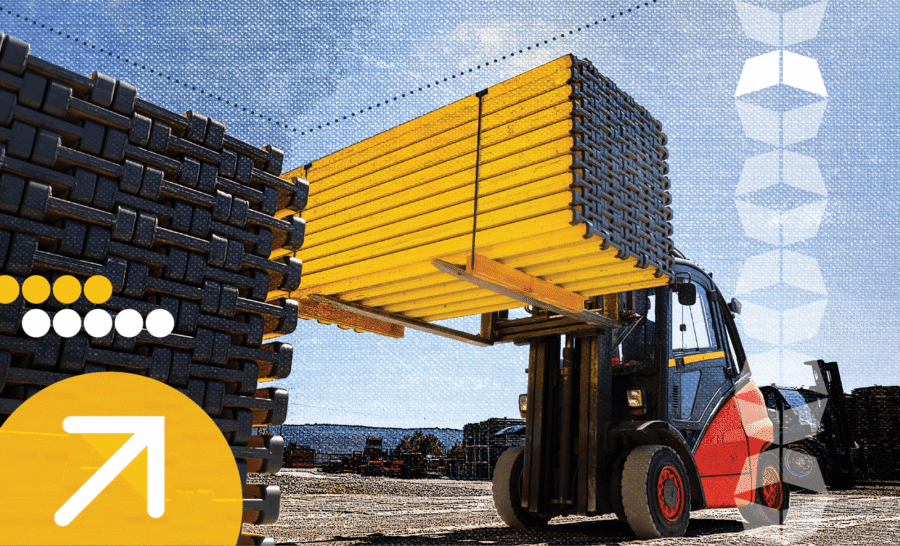
The Key 3PL Services for Construction Logistics
Building products manufacturers and distributors are being asked to absorb more complexity than ever. Rising material costs, cross-border tariff exposure, and unpredictable carrier capacity are not brand new pressures in construction logistics, but the margin for error has gotten smaller.
When inbound freight arrives late, inventory sits in the wrong location, or a shipment gets damaged in transit, the downstream effects move fast. That’s why more building products companies are rethinking how their warehousing and distribution network is structured. A 3PL built for building products logistics provides the infrastructure, equipment, and network to keep heavy, oversized, high-value materials moving with the consistency your customers expect and the visibility your operations team needs to stay ahead of disruption.
Why Construction Logistics Requires a Different Model
Trade policy shifts in 2025 introduced new tariffs on lumber, steel, and other key building inputs, adding cost uncertainty to supply chains that were already navigating tight inventory and rising material prices. For companies sourcing from cross-border suppliers, the pressure to reposition inventory, qualify domestic alternatives, and reduce exposure to long-haul transportation has become immediate.
This is changing how building products companies think about warehousing. Holding inventory in strategically located, rail-served distribution facilities has become a hedge against both tariff-driven cost swings and carrier capacity constraints. A 3PL with the right network and infrastructure can absorb that complexity so project timelines don’t have to.
According to The Construction Association, over 60% of contractors report supply chain issues with concerns about costs and shortages. At the same time, cost pressure continues to rise, and almost 40% of contractors expect material prices to rise further in the coming months.
Construction supply chains operate under tighter constraints than most industries. Materials may be bulky, high value, or frequently exposed to environmental risk. Components for manufacturing often rely on just-in-time logistics and finished products for job sites generally have limited storage, so delivery timing must align closely with build phases.
This combination makes construction logistics coordination more important than ever, making it crucial to have a 3PL for construction materials that is built to manage that complexity across warehousing, transportation, and job site delivery.
What a 3PL for Construction Materials Does
A building materials 3PL supports construction supply chains end to end, connecting inbound materials, storage, and delivery into a single coordinated system. The services should align to meet construction needs.
Common building material 3PL services
| 3PL Service | How It Supports Construction Logistics | Impact on Project Performance |
| Specialized Warehousing | Stores heavy, oversized, or regulated materials with proper handling | Reduces damage and material loss |
| Inventory Visibility | Tracks materials across locations in real time | Prevents shortages and over-ordering |
| Just-in-Time Delivery | Aligns delivery schedules to build phases | Minimizes site congestion and delays |
| Cross-Docking | Short-term storage or direct move Moves materials directly from inbound to outbound transport | Speeds up delivery and reduces storage costs |
| Last-Mile Delivery | Coordinates delivery to active or hard-to-access job sites | Improves delivery accuracy and timing |
| Scalable Capacity | Adjusts storage and transportation based on project demand | Supports changing project requirements |
Each of these services plays a role, but their value comes from how they work together. Construction logistics should be designed to maintain the flow throughout the lifecycle of a project.
3PLs for building materials also offer the following benefits:
Reducing damage and material loss
Handling construction materials is not straightforward. Items like steel components, drywall, or insulation can be damaged through improper storage or excessive handling. Other building or raw materials are at risk when exposed to the elements.
When a 3PL specializes in the handling, storage, and distribution of building materials, they have the right infrastructure and processes to protect materials throughout the supply chain. This includes reinforced storage environments, equipment designed for heavy loads, and handling protocols that reduce unnecessary movement.
When damage is reduced, it prevents reorders, helping to avoid delays and keep projects on track.
Preventing construction site theft
Construction sites have become targets to thieves due to the high value of equipment and materials. The U.S. Department of Energy estimates that copper wiring theft costs the U.S. construction industry over $1 billion annually in losses. Lumber is another common target, making it beneficial to take steps to prevent construction sites thefts.
Theft often leads to work stoppages and significant losses.
Using a 3PL for construction materials helps prevent site theft by minimizing how long materials sit exposed on job sites through coordinated, just-in-time delivery. It also adds secure warehousing, controlled access, and real-time inventory tracking, reducing opportunities for loss and improving accountability across the supply chain.
Aligning delivery with the job site
Timing is one of the most challenging variables in construction. Materials delivered too early create storage and safety issues and delivered too late, they halt progress.
A just-in-time delivery strategy solves both problems by aligning shipments with real project timelines. Instead of staging excess materials on-site, a 3PL coordinates delivery windows based on when materials are actually needed.
When constructions logistics are approached this way, it reduces congestion and limits exposure to theft or weather.
Improving visibility across materials and locations
One of the most common breakdowns in construction logistics is lack of visibility. Teams may not know things like:
- What inventory is available
- Where inventory is located
- When materials will arrive
In 2025, a survey found that only 13% of businesses self-reported that they had full supply chain visibility.
A 3PL for construction materials should have the ability to offer real-time insight into inventory and shipments, allowing teams to adjust quickly when conditions change. This is especially important when managing multiple job sites or sourcing materials from different suppliers.
With accurate data, project managers can make informed decisions instead of reacting to surprises.
Keeping materials moving with cross-docking
Not every material needs to be stored. In many cases, the fastest and most efficient path is to move product directly from inbound transportation to outbound delivery. Cross-docking supports this by minimizing dwell time in the warehouse. Materials are received, sorted, and quickly redirected to their next destination.
This reduces storage costs and shortens delivery timelines, which is especially valuable for high-demand or time-sensitive materials. With building materials, it can be an advantage to work with rail-served 3PLs.
Managing last-mile complexity
The final leg of delivery is often the most challenging in construction logistics. Job sites may be difficult to access, still under development, or operating under tight delivery windows.
A 3PL with experience in construction materials coordinates these deliveries with the right equipment, routing, and scheduling. This ensures materials arrive safely and in sequence with the project timeline.
Scaling with project demand
Construction activity is not static. Demand shifts as projects begin and ramp up. A 3PL provides the flexibility to scale storage and transportation capacity without requiring permanent infrastructure investment. Whether supporting a single project or a regional network of sites, this flexibility helps control costs and maintain performance.
Why Rail Access Changes the Math for Building Products Logistics
For manufacturers and distributors moving lumber, steel, engineered wood, or aggregates at volume, raiil logistics is a critical a cost and capacity decision. Trucking often works for the final mile, but for big and bulky, overweight or oversized freight, it’s expensive.
A single railcar can carry what would otherwise require multiple truckloads, at a significantly lower cost per ton. For companies sourcing materials by the carload — or managing inbound from Canadian or Midwest suppliers — that difference compounds quickly across a distribution network.
Rail-served warehouses solve another problem. Oversized panels, structural lumber, and heavy steel components require the right infrastructure at both ends of the move. Besides railcar unloading equipment, the floor space, ceiling height, and material handling capability to stage and redistribute efficiently are critical. A rail-served 3PL purpose-built for heavy and oversized freight connects inbound rail to outbound distribution without the handling damage or delay that comes from facilities not designed for it.
Construction Logistics as a Strategic Advantage
When construction logistics is fragmented, delays and inefficiencies follow. When it is coordinated, projects move faster, costs stabilize, and teams operate with greater confidence.
A case study in building material logistics
For manufacturers moving heavy, oversized building materials, standard warehouse models often fall short. That was the challenge facing a U.S.-based engineered wood components manufacturer distributing high-density fiberboard (HDF) and door components across the Midwest and Canada. Products arrived by rail in bundles over 10 feet long and weighing thousands of pounds, requiring specialized unloading, handling, and storage that most 3PLs could not support.
WSI provided a rail-served warehouse network in Wisconsin, positioned close to the company’s core customer base. This allowed materials to move from inbound rail to outbound distribution quickly, reducing transit time and keeping inventory close to production demand. More importantly, WSI engineered workflows specifically for oversized freight, from unloading railcars to side-loading outbound trailers using specialized equipment and trained operators.
The result is a long-standing partnership built on consistency and performance. The operation delivers 100% on-time order fulfillment and 100% inventory accuracy, while maintaining efficient, repeatable processes for high-volume, heavy materials.
Store, Distribute, and Transport Construction Materials with WSI
WSI delivers specialized warehousing, distribution, and visibility solutions designed for big and bulky and materials that require specialized handling. Connect with our team to build a more efficient, resilient supply chain.
About the Author

Alyssa Wolfe
Alyssa Wolfe is a content strategist, storyteller, and creative and content lead with over a decade of experience shaping brand narratives across industries including retail, travel, logistics, fintech, SaaS, B2C, and B2B services. She specializes in turning complex ideas into clear, human-centered content that connects, informs, and inspires. With a background in journalism, marketing, and digital strategy, Alyssa brings a sharp editorial eye and a collaborative spirit to every project. Her work spans thought leadership, executive ghostwriting, brand messaging, and educational content—all grounded in a deep understanding of audience needs and business goals. Alyssa is passionate about the power of language to drive clarity and change, and she believes the best content not only tells a story, but builds trust and sparks action.